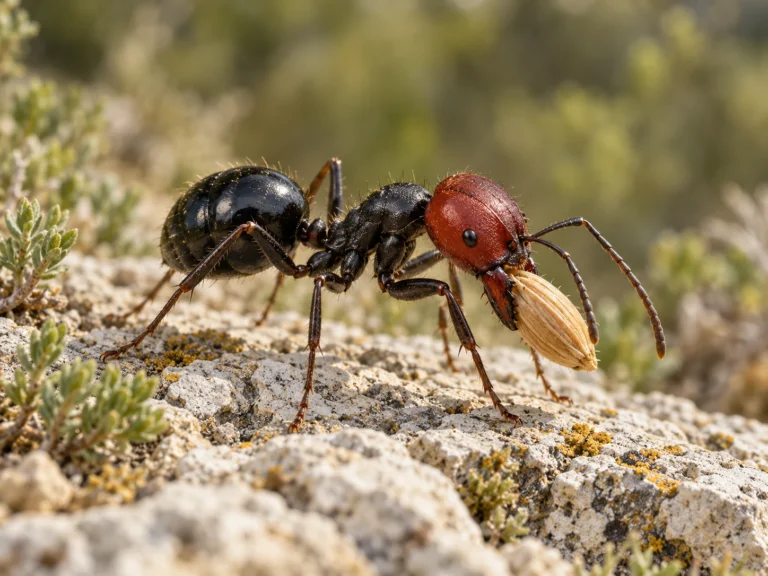
Messor structor

Harvester ant

Also known as European harvester ant (trade name; also used for other European Messor species)

  • Difficulty Beginner level
  • Origin Europe

A large seed-harvesting ant of southern and central Europe. Several queens, thousands of workers and a rewarding first harvester colony.

Ask about availability

Origin
Europe (Southern and central Europe, extending into North Africa and western Asia)
Difficulty
Beginner level
Worker ant length
About 4–10 mm
Colony size
Thousands of worker ants
Queens
Several queens (polygynous)
Winter rest
Required
Climate
Temperate

About this species

Messor structor is a seed-harvesting ant of southern and central Europe, with a range that extends into North Africa and western Asia. It lives in dry, open habitats such as steppe and sandy grassland.

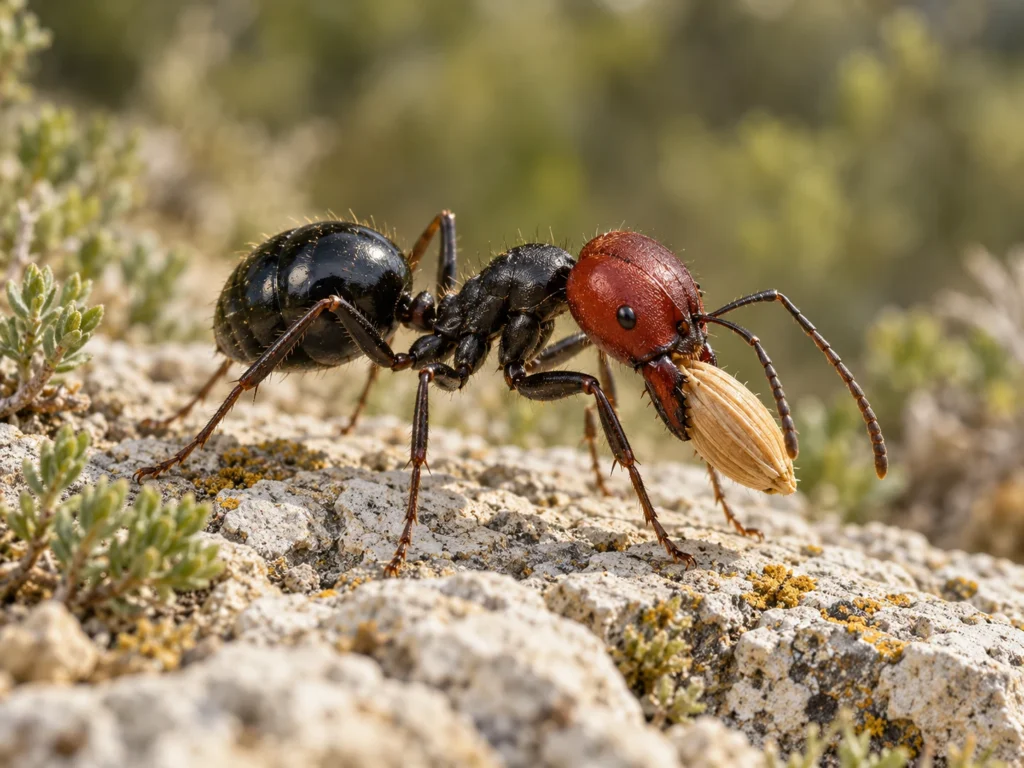
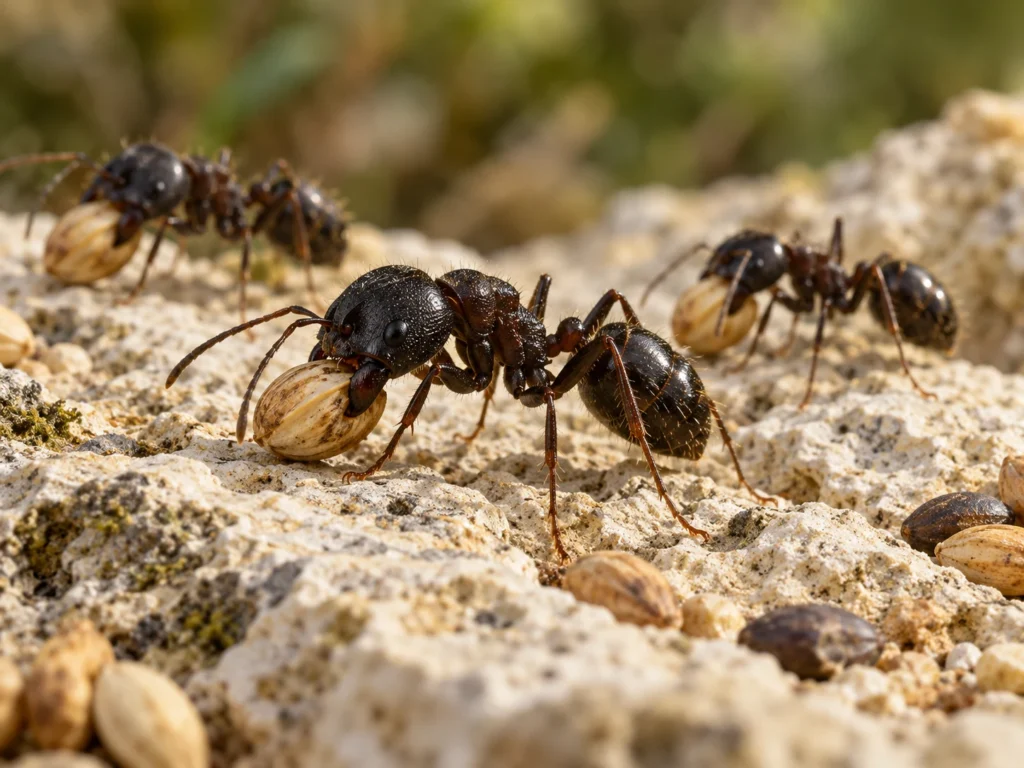
Workers collect seeds through the warm season and store them in underground granaries; worker sizes vary from about 4 to 10 mm, which makes the colony interesting to watch. Colonies often have several queens and can grow to thousands of workers, and some populations form large networks of connected nests.

Ant-keeping sources describe it as one of the easier ants to start with. It needs a cool winter rest and a steady supply of seeds, which makes it a good choice for a first colony. The name Messor structor may cover several closely related species, so ask ANTELYX which population a colony comes from.

Identification

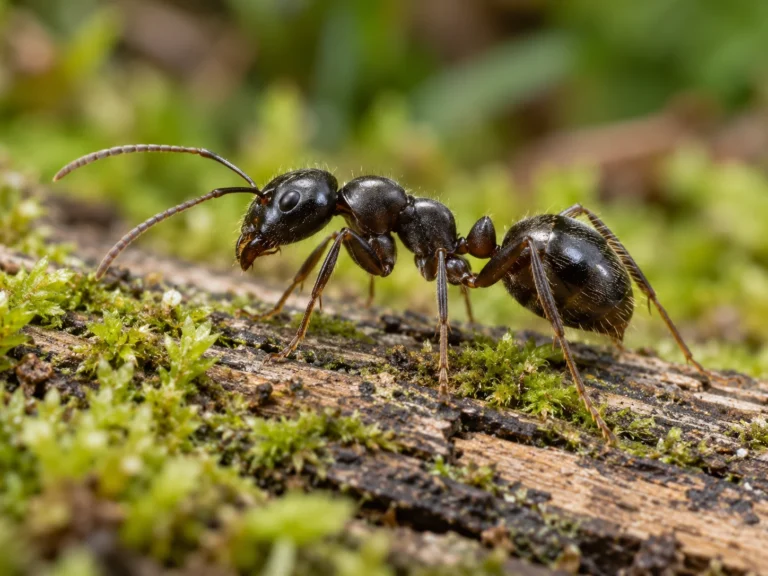
A large seed-harvesting ant with strongly varying worker sizes. Workers are dark brown to black and carry stiff hairs.

Worker ant length
About 4–10 mm
Worker ant colour
Dark brown to black, often with a brown or reddish tinge
Worker ant sizes
Polymorphic (many worker sizes)

Taxonomy notes. The name Messor structor is used for a group of closely related ants. Research on Central European populations found more than one species, so the exact identity of a colony depends on where it comes from (Schlick-Steiner et al., 2006).

Natural habitat and range

Dry, open habitats such as steppe, sandy ground, grassland and other well-drained open areas.

Southern Europe (including the Iberian Peninsula, France, Italy and the Balkans), through North Africa and into western Asia. The range reaches the southern parts of Central Europe.

Behaviour

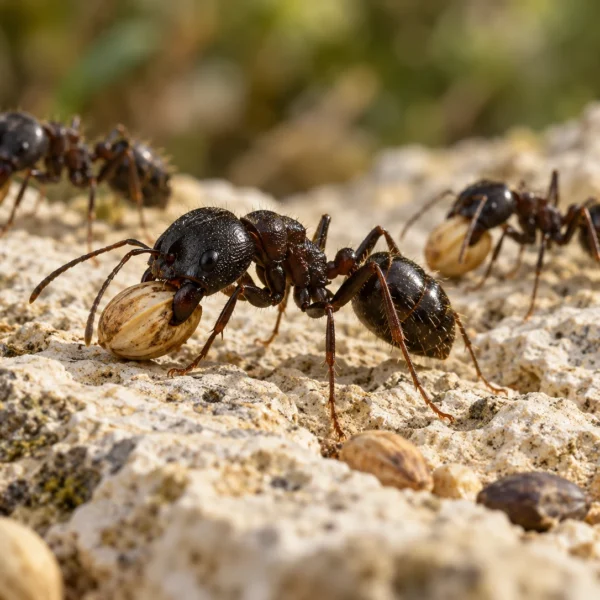
Workers harvest seeds throughout the warm season, remove the seed appendages and store the seeds in underground granaries.

Colonies can accumulate large seed stores in underground chambers.

Colony development

Colonies often have several queens and can grow to thousands of workers.

Some populations form large networks of connected nests without clear borders between them.

Queens
Several queens (polygynous)
Typical size
Thousands of worker ants
Maximum size
About 5,000 worker ants are reported in the wild; larger captive colonies are anecdotal.

Care requirements

Ant-keeping sources agree on a nest temperature of about 22–26 °C, seeds as the staple food with small insects for protein, and a cool winter rest of a couple of months. The sources differ on the rest temperature and length (for example 10–15 °C for 2–3 months, or about 15 °C from November to February) and on humidity, so those figures are not published.

Temperature
22–26 °C
Winter rest
Required
Experience level
Beginner-friendly: a good first harvester ant for new ant keepers

Feeding

Mainly seeds, which workers collect and store in underground chambers. Ant keepers also offer small insects as protein.

Nest requirements

Nest requirements for this species are being verified.

Available Colonies

Colonies of this species that are currently listed. Not sure which to choose, or want to know more? Ask us before you order.

Shipping notes

Whether this species can be shipped depends on your destination country. Check the shipping information before you order.

Frequently asked questions

Questions about this species.

What does Messor structor eat?

Mainly seeds. Workers collect them and store them in underground chambers. Ant keepers also offer small insects as protein.

Does it have more than one queen?

Colonies are often polygynous, which means they can have several queens.

Is Messor structor a single species?

The name is used for a group of closely related ants. Research on Central European populations has found more than one species, so the exact identity of a colony depends on where it comes from.

What temperature does it need?

Ant-keeping sources agree on about 22–26 °C for the nest.

Does it need a winter rest?

Yes. Ant-keeping sources recommend a cool winter rest of a couple of months; the exact temperature and length differ between sources.

Is it a good ant for beginners?

Ant-keeping sources describe it as one of the easier species to keep.

The difficulty level is shown at the top of this page. The Ant Keeping guide explains what to expect at each level.

Each product describes what is included. Colony contents vary by species and product.

Availability depends on your destination. See the shipping notes above and the shipping page.

Sources and further reading

Interested in this species?

Have questions about availability, colony size, care requirements or shipping? Contact ANTELYX before you order. You do not need an account or a cart.

Images are AI-generated illustrations, not identification photographs.

Shopping Cart
Scroll to Top