Lasius niger

Black garden ant

Also known as Common black ant

  • Difficulty Beginner level
  • Origin Europe

One of Europe’s best-known ants and a popular first species: one queen, several thousand workers and a straightforward setup.

Not currently listed

Origin
Europe (Europe; also reported from parts of North America and Asia)
Difficulty
Beginner level
Worker ant length
About 3–5 mm
Colony size
About 4,000–7,000 worker ants
Colony growth
Moderate
Queens
One queen (monogynous)
Winter rest
Required
Climate
Temperate

About this species

Lasius niger, the black garden ant, is one of the most familiar ants in Europe. It nests under stones, in lawns and along paths, and colonies are led by a single queen who can live for many years: up to 29 years has been recorded.

Workers are small, about 3 to 5 mm, and glossy black to dark brown. They feed on aphid honeydew, nectar and small insects, so a ant keeper offers sugar water and protein. A new colony starts with one queen in a sealed chamber, and a mature colony usually numbers several thousand workers.

Because it is hardy, small and easy to feed, it is the species most ant keepers start with. It does need a cold winter rest of a few months each year. Ask ANTELYX about the queens and colonies available and how a colony is sent to you.

Identification

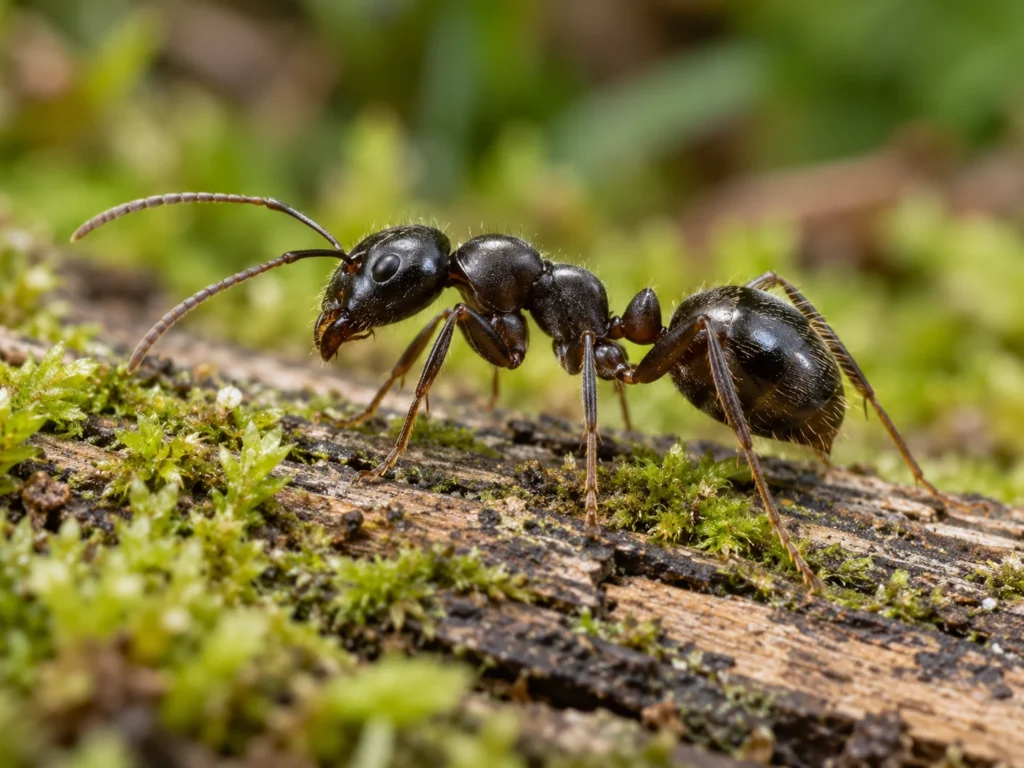
A small, glossy black to dark brown ant. Workers are about 3–5 mm long and the queen is clearly larger. It belongs to a group of similar Lasius species.

Worker ant length
About 3–5 mm
Worker ant colour
Black to dark brown, glossy
Queen length
About 8–9 mm (published figures range from 6 to 11 mm)

Taxonomy notes. In Europe the former single species was split: Lasius niger lives mainly in open habitats and the very similar Lasius platythorax in woodland. Which of the look-alike species a queen belongs to can depend on where it was collected.

Natural habitat and range

Open and disturbed habitats: gardens, parks, meadows, farmland, forest edges and towns. The nest is underground, commonly under stones, but also in rotten wood and under roots.

Widespread across Europe, with populations also reported from parts of Asia and North America.

Behaviour

Workers collect sugary liquids such as aphid honeydew and nectar, and small insects. They follow scent trails to food and look after aphids on plants.

Queens are exceptionally long-lived: up to 29 years has been recorded, the longest known for any social insect. The ants keep aphids for their honeydew and also look after the caterpillars of the silver-studded blue butterfly.

Colony development

A single queen founds the colony alone in a sealed chamber and does not need to eat until her first workers appear (claustral founding).

The first workers are small. Once they begin to forage the colony grows quickly; after several years an established colony produces winged queens and males for the mating flights, which in Europe usually take place in July and August.

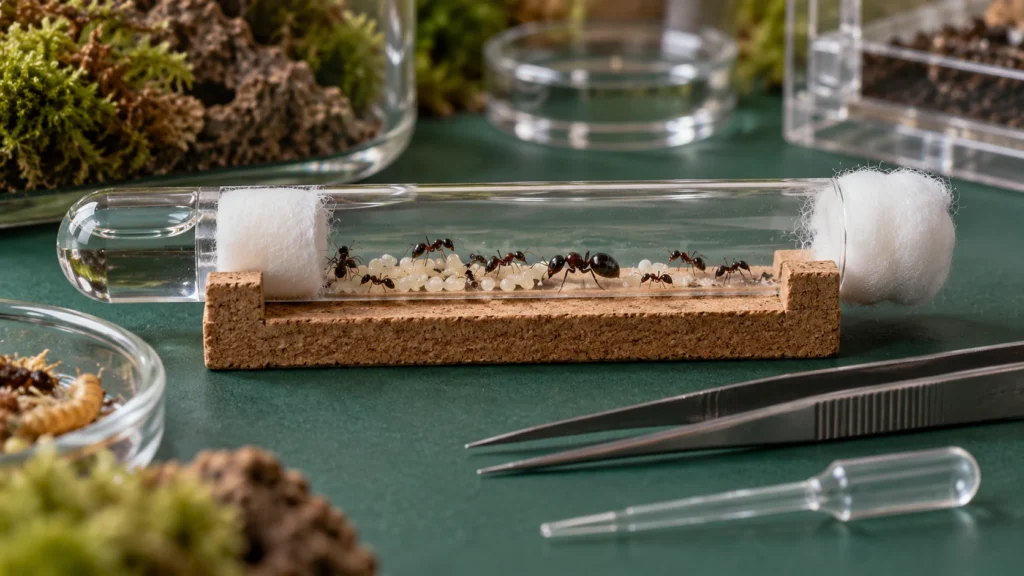
Eggs, larvae and pupae in cocoons. A founding queen’s eggs develop into the first workers in roughly 8–10 weeks.

Queens
One queen (monogynous)
Typical size
About 4,000–7,000 worker ants
Maximum size
Up to about 40,000 worker ants in rare cases.
Growth
Moderate

Care requirements

Keep the nest at about 20–24 °C and moderately humid (about 50–60 percent). Offer sugar water or diluted honey and small insects regularly, and always provide water. A winter rest at about 5–10 °C from roughly late October to early March is recommended by ant-keeping sources; without it a colony may not do well. The sources disagree on how high the escape risk is, so use a barrier on the outworld.

Temperature
20–24 °C
Humidity
50–60 %
Nest type
Test tube to start, then a Ytong, plaster or acrylic nest or a naturalistic setup
Winter rest
Required
Experience level
Beginner-friendly: hardy and forgiving, a good first species

Feeding

Sugars (honeydew from aphids in nature; sugar water or diluted honey in captivity) and protein from small insects. Fresh water should always be available.

Nest requirements

Nest type. Test tube to start, then a Ytong, plaster or acrylic nest or a naturalistic setup

Available Colonies

Colonies of this species that are currently listed. Not sure which to choose, or want to know more? Ask us before you order.

There are currently no colonies listed for this species. If you would like to know about availability, ask ANTELYX.

Ask About Availability

Shipping notes

Whether this species can be shipped depends on your destination country. Check the shipping information before you order.

Frequently asked questions

Questions about this species.

What is Lasius niger?

Lasius niger, the black garden ant, is one of the most common ants in Europe. Workers are small and glossy black to dark brown.

How many queens does a colony have?

One. Colonies are monogynous. Founding queens may tolerate each other for a short time, but only one queen remains once workers appear.

How big does a colony get?

Usually about 4,000 to 7,000 workers, and in rare cases up to about 40,000.

Do they need a winter rest?

Yes. Ant-keeping sources recommend about 5–10 °C from roughly late October to early March.

What do they eat?

Sugary liquids such as honey water or sugar water, and small insects as protein, with water always available.

How long do queens live?

Up to 29 years has been recorded in a queen; typical figures are lower.

Is it a good ant for beginners?

Yes. Ant-keeping sources rate it Beginner-friendly: it is hardy, small and easy to feed.

The difficulty level is shown at the top of this page. The Ant Keeping guide explains what to expect at each level.

Each product describes what is included. Colony contents vary by species and product.

Availability depends on your destination. See the shipping notes above and the shipping page.

Sources and further reading

Interested in this species?

Have questions about availability, colony size, care requirements or shipping? Contact ANTELYX before you order. You do not need an account or a cart.

Images are AI-generated illustrations, not identification photographs.

Shopping Cart
Scroll to Top