Myrmecocystus mexicanus

Mexican honeypot ant

Also known as Honeypot ant, Honey ant (a general name for several genera)

  • Difficulty Intermediate level
  • Origin North America

Famous for its repletes, living food stores that hang from the nest ceiling: a nocturnal desert ant of the American Southwest and Mexico.

Not currently listed

Origin
North America (Southwestern United States and northern Mexico)
Difficulty
Intermediate level
Activity
Mostly nocturnal (night active)
Colony size
About 5,000 individuals in wild colonies in one survey; fewer in captivity
Colony growth
Moderate
Queens
One queen (monogynous)
Climate
Warm

About this species

Myrmecocystus mexicanus, the Mexican honeypot ant, comes from the arid southwest of the United States and parts of Mexico. It is best known for its repletes: workers that swell with liquid food until they hang from the nest ceiling as living food stores that the rest of the colony can draw on.

It is a nocturnal species. Workers forage mainly at night, collecting nectar, honeydew and dead insects, and a colony is led by a single queen. Wild colonies can number thousands of ants, and the pale, golden workers make a striking colony.

Ant-keeping sources rate it Intermediate: it needs warmth, a deep nest with a sandy substrate and tall chambers, and a steady supply of sugar water. It suits ant keepers who want something different from the usual starter species. Ask ANTELYX about the colonies available.

Identification

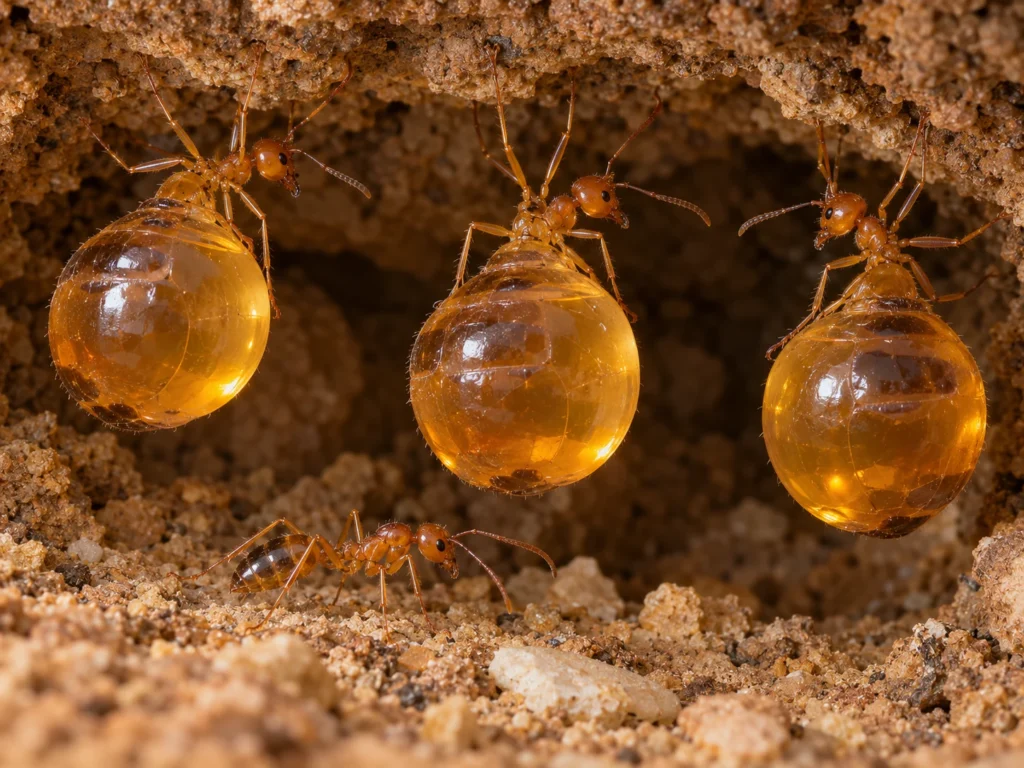
Pale, golden-looking ants whose workers vary in size. The repletes have a swollen, translucent abdomen that can look like an amber bead.

Worker ant colour
Pale yellowish to light tan, with a slightly darker head and a brownish-grey gaster

Natural habitat and range

Deserts, arid grassland and scrubland. Nests are often placed on ridges and mesas with open, uncovered entrances, and they reach deep underground: one ant-keeping source reports wild nests about 0.8 to 2.3 m deep.

The arid and semi-arid southwest of the United States and parts of Mexico.

Behaviour

Foraging happens mainly at night, roughly from March to November in the wild, and workers have been recorded foraging at temperatures from 0.5 to 30 °C. They forage up to about 20 m from the nest entrance.

Repletes: some workers, developing from the largest workers, swell with liquid food until they hang motionless from the ceilings of nest chambers and act as living food storage. Other workers drain them when food is scarce, usually in winter. In one survey repletes made up about 22–25 percent of a colony.

Escape risk
Moderate
Visibility
Mostly hidden or nocturnal

Colony development

A newly mated queen digs a chamber, seals it and lays her first eggs about five days after the mating flight (claustral founding).

The first workers are smaller than later ones. In an established colony the largest workers can become repletes, and ant-keeping sources describe moderate growth.

A founding queen lays eggs about five days after her mating flight, and the first workers emerge about 63 days after the eggs are laid.

Queens
One queen (monogynous)
Typical size
About 5,000 individuals in wild colonies in one survey; fewer in captivity
Growth
Moderate

Care requirements

Ant-keeping sources agree on warmth, about 26–29 °C, and an arid setup: a dry nest with a small water source, a deep nest with sandy substrate and tall chambers, constant access to sugar water and small insects for protein. The ants are nocturnal. The sources do not agree on worker and queen size and give no clear humidity figure or winter rest, so none are published.

Temperature
26–29 °C
Nest type
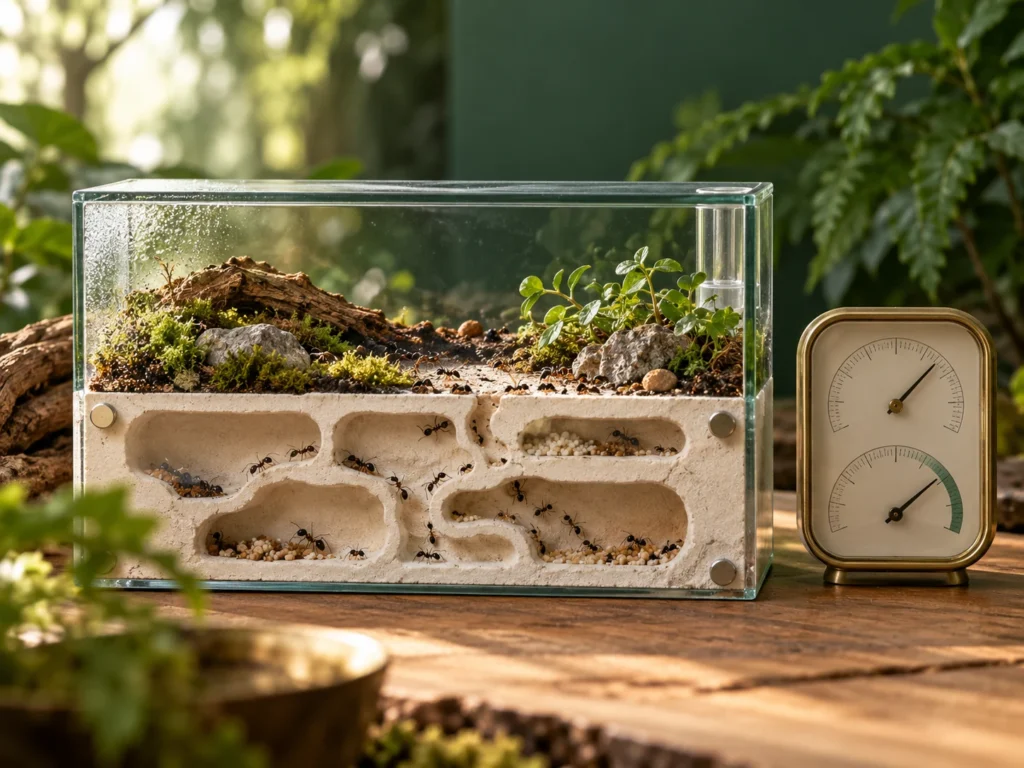
Deep nest with a sandy substrate and tall chambers where the repletes can hang
Nest size
Height matters: one source recommends at least 6–8 inches (15–20 cm) of substrate
Experience level
Intermediate: needs a deep, warm setup and the ants are nocturnal

Feeding

In nature mainly nectar and other sugary liquids (yucca nectar, galls on scrub oak, flower nectars, aphid honeydew) plus dead insects, especially harvester ants. In captivity sugar water or honey water is kept available, with small insects as protein.

Nest requirements

Nest type. Deep nest with a sandy substrate and tall chambers where the repletes can hang

Recommended nest size. Height matters: one source recommends at least 6–8 inches (15–20 cm) of substrate

Available Colonies

Colonies of this species that are currently listed. Not sure which to choose, or want to know more? Ask us before you order.

There are currently no colonies listed for this species. If you would like to know about availability, ask ANTELYX.

Ask About Availability

Shipping notes

Whether this species can be shipped depends on your destination country. Check the shipping information before you order.

Frequently asked questions

Questions about this species.

What is a replete?

A replete is a worker that swells with liquid food until it hangs from the nest ceiling and acts as living food storage for the colony.

Are honeypot ants nocturnal?

Yes. Workers forage mainly at night.

What do they eat?

Nectar and other sugary liquids, plus small insects. In captivity ant keepers keep sugar water available and offer small insects as protein.

Where does Myrmecocystus mexicanus come from?

From the arid southwest of the United States and parts of Mexico.

How big does a colony get?

In one survey of wild colonies a typical colony held about 5,000 ants. Captive colonies are usually smaller.

Is it a good ant for beginners?

Ant-keeping sources rate it Intermediate: it needs warmth and a deep nest.

The difficulty level is shown at the top of this page. The Ant Keeping guide explains what to expect at each level.

Each product describes what is included. Colony contents vary by species and product.

Availability depends on your destination. See the shipping notes above and the shipping page.

Sources and further reading

Interested in this species?

Have questions about availability, colony size, care requirements or shipping? Contact ANTELYX before you order. You do not need an account or a cart.

Images are AI-generated illustrations, not identification photographs.

Shopping Cart
Scroll to Top